By SUE SUCHYTA
Sunday Times Newspapers
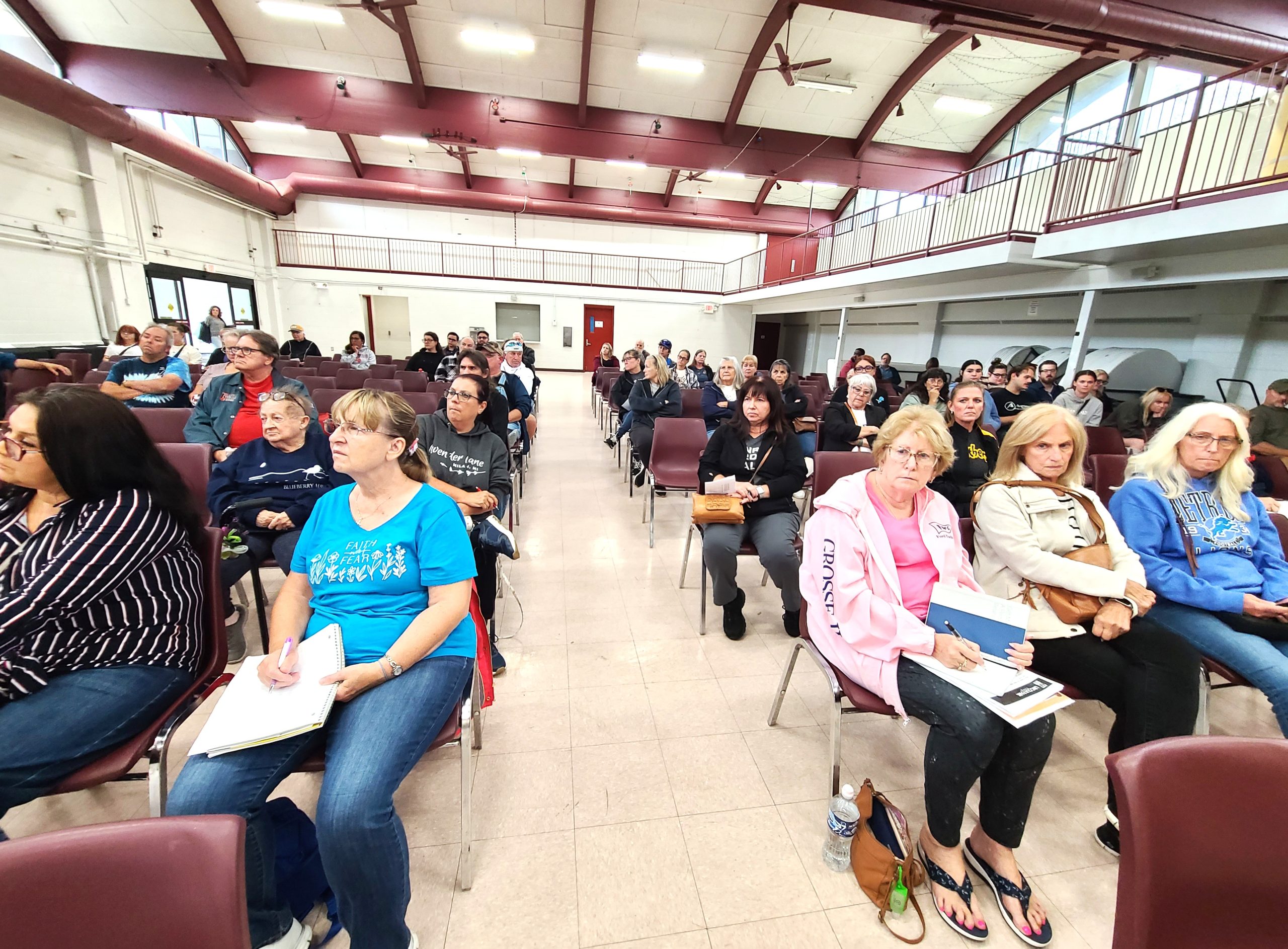
LINCOLN PARK – Residents filled the Kennedy Memorial Center the evening of Sept. 21 to learn more about the increases to their water and sewer bills and the cost to fix aging infrastructure.
The city, an inner ring suburb, has century old infrastructure, and is experiencing up to a 40 percent loss before the water from the Great Lakes Water Authority even enters homes and businesses, for which the city must pay.
In addition, a fixed cost to customer accounts, to replace the aging water and sewer infrastructure, will be added to all bills to help rebuild the aging system, something that is stressful for all, but especially seniors and others on fixed incomes.
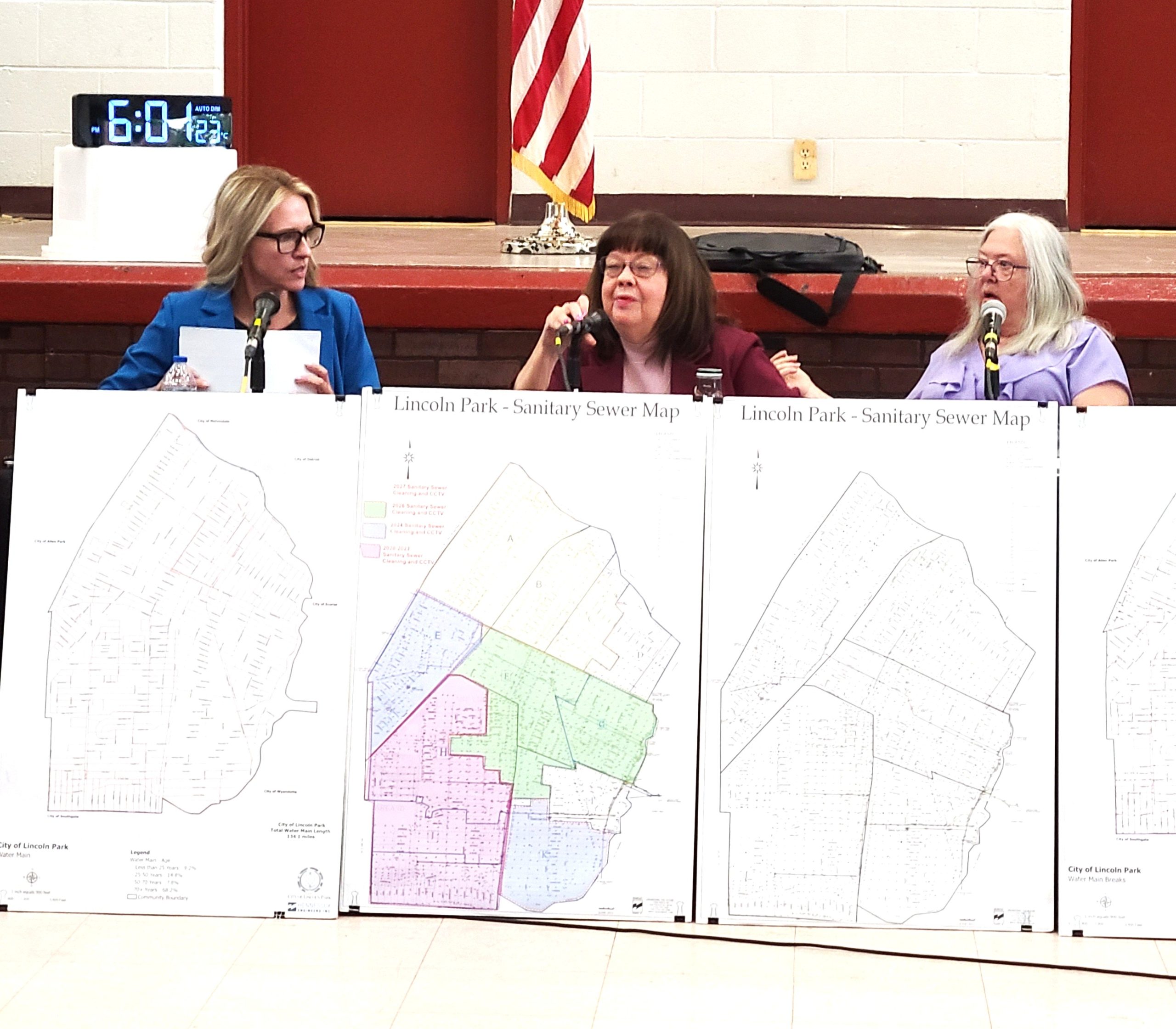
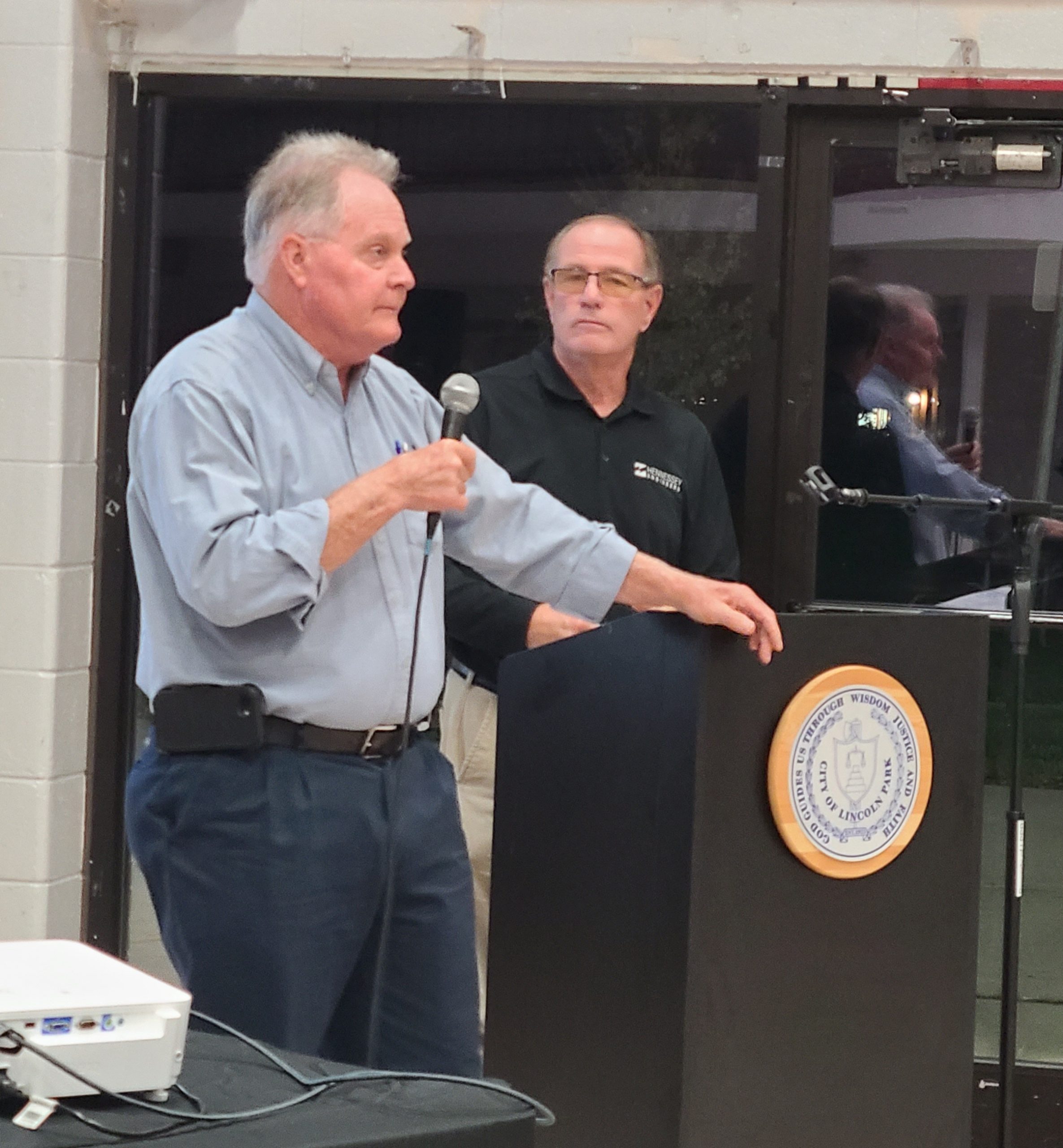
Brian Camiller of Plante Moran explained the scenarios that the city considered to pay for the water loss as well as begin to repair and rebuild the water and sewer system, while Jim Hollandsworth, a professional engineer and project manager from Hennessey Engineering explained the infrastructure problems the city faces.
John Kozuh, Director of the Department of Public Services, answered questions from residents as well.
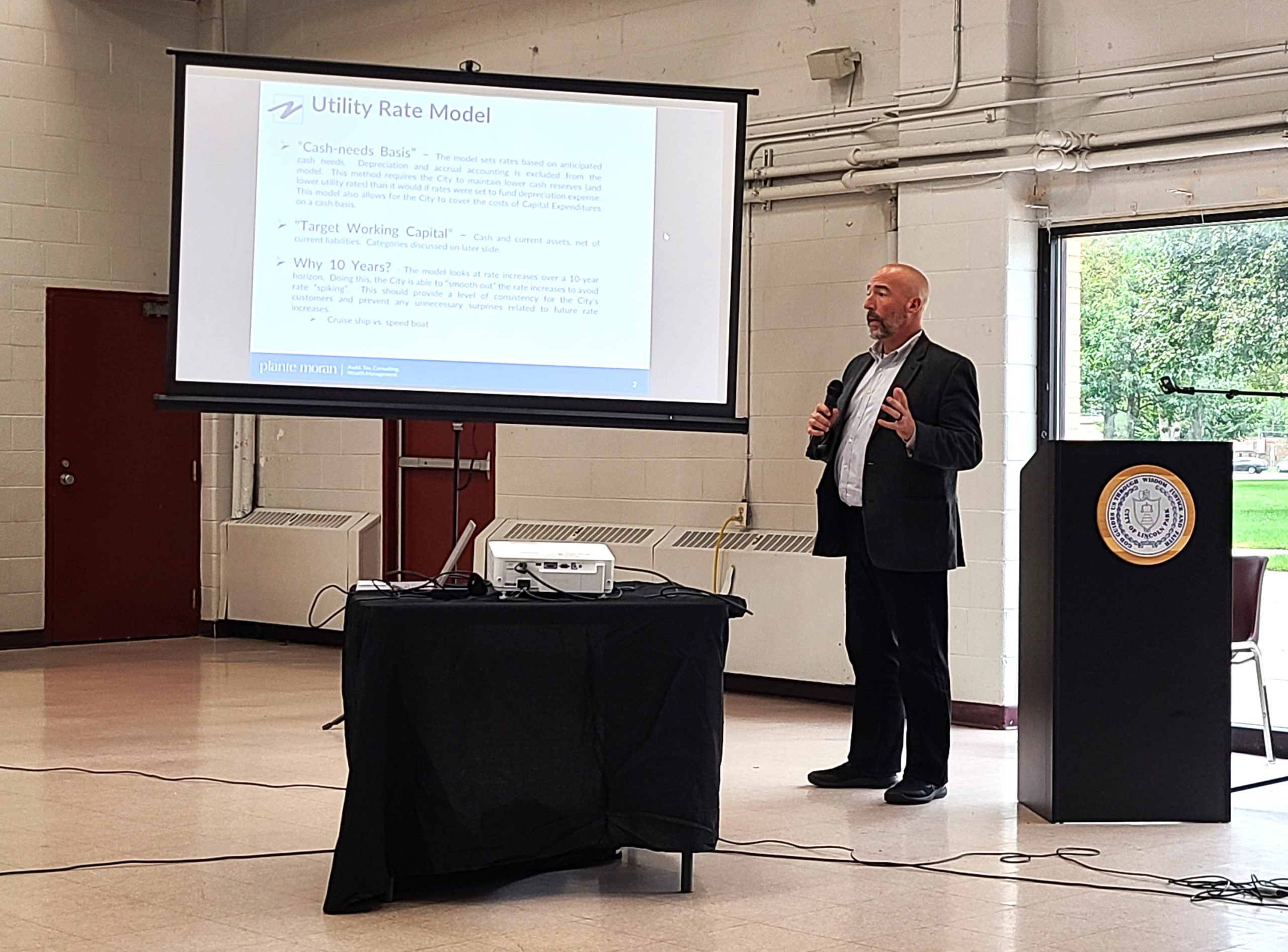
Camiller explained the need for cash and working capital to repair infrastructure, as well as the need to level out the increases over 10 years to smooth out the amounts due that would otherwise be significant spikes in residents’ bills.
He explained that a component of the bill, the Ready to Serve, RTS charge, is a monthly fixed charge that is separate from the variable amount of the bill that is based on how much water a household uses.
He explained that a fixed portion of a bill impacts low volume users more than high volume users, because it is a larger, more significant portion of their quarterly bill.
Currently, the city’s RTS charge only covers about 13.5 percent of the water and sewer department’s administrative expenses. By increasing the RTS, the city can capture more of the water and sewer operational expenses, as well as some capital outlay and debt service.
The city contracts with the Great Lakes Water Authority for its water, and with the Downriver Utility Wastewater Authority for its wastewater treatment.
Camiller explained the city’s outstanding infrastructure debt, as well as the additional investment in water and sewer infrastructure that the city needs in the next 10 years.
He said that while the first year’s increase to the RTS of 65 percent would be the toughest on residents, the annual increase in following years would follow the increase in inflation.
Following Cammiller, Professional Engineer and Project Manager Hollandsworth said the city is continuing to replace lead water lines entering houses, and has replaced 1,375, with 450 scheduled for replacement in 2026, which would leave 976 lead lines remaining to be replaced.
He also explained that most of the current water mains in the city were installed in the 1930s and 1940s, have exceeded their useful life, and need to be replaced.
Hollandsworth said many watermains have calcium buildup in the lines, which decreases the amount of water that can move through the pipes, which also decreases water pressure.
He said the city has experienced 136 water main breaks this year, and 91 percent of the breaks have occurred in water mains that are more than 70 years old.
Hollandsworth said the valves in the water main system are old and not functioning, and the decrease in water pressure impacts the functionality of fire hydrants.
The city plans to install pressure relief valves in the water system so that when GLWA increases the water pressure to reach outer ring suburbs, the spike in pressure will not have as great of a damaging effect on Lincoln Park’s closer, inner ring suburban aging water mains.
He said the most recent readings in August show a 38 percent water loss, of which 16 percent is attributed to water main breaks, and 22 percent is due to fire hydrant use, faulty meters and unrecognized causes.
Hollandsworth said the city’s sewer system needs to be cleaned and inspected with a camera system to identify sewer defects, then a rehabilitation plan needs to be developed.
He said illicit connections also need to be identified.
Hollandsworth explained that the Michigan Department of Environment, Great Lakes and Energy, EGLE, provides grants and low interest loans, and assists with the funding of water and sewer distribution system improvements.
He said for the water system, the city received a $34.7 million grant, a $9.4 million low interest loan, and $6.25 million in city water funds.
Hollandsworth said the city is no longer considered an “over-burdened community” and does not qualify for the Drinking Water State Revolving Fund money or low-interest loan funds.
He said the Lincoln Park sewer system received a $32.1 million grant, a $15.7 million low interest loan, and $1.3 million in city sewer funds.
The current mayor and city council are preparing an Asset Management Plan for water and sewer infrastructure, which is needed to apply for additional grants and low interest loans.
Lincoln Park has 134.1 miles of water mains, with 68.2 percent 70 years or older, 7.8 percent 50 to 70 years old, and 14.8 percent 25 to 50 years old.
The city’s sewer system was installed in the 1920s and is 138 miles long.
For more information about the city’s water and sewer rates, and a link to the meeting video, go to citylp.com/234/Water-Sewer-Rates and select from the provided links.