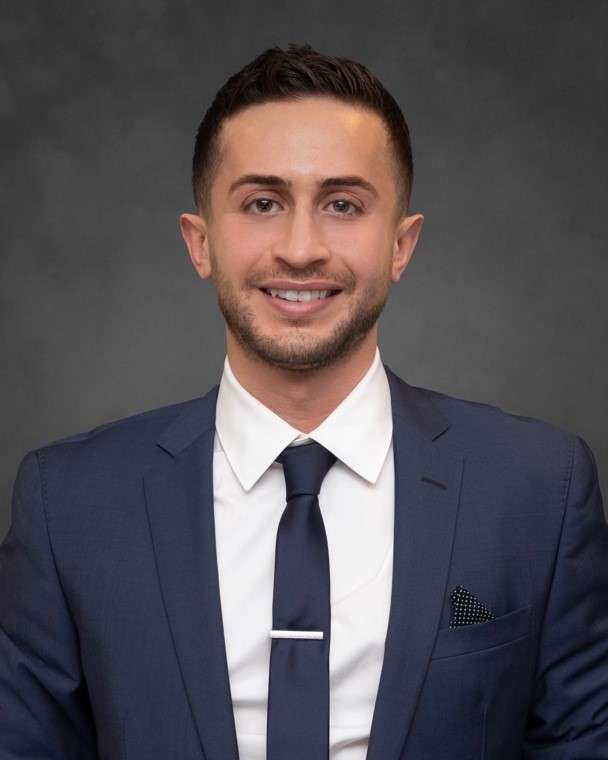
DEARBORN – Ali Abazeed was appointed the inaugural director of the city’s re-established Department of Public Health by Mayor Abdullah Hammoud.
Abazeed, a Dearborn native, most recently served as a public health advisor at the National Institutes of Health, the Federal agency responsible for conducting and supporting the nation’s biomedical and public health research.
“Nothing could have better clarified the need to upgrade our public health systems than this once-in-a-century pandemic,” said Hammoud, an epidemiologist by training. “This department is about being accountable to our residents and no longer deferring our responsibility for the public’s health to other venues.
“Dearborn’s urgent health challenges demand innovative solutions, and that starts with bringing in the caliber of expertise that can meet those challenges head on. I’m proud to welcome Ali Abazeed back home to work on the issues he has devoted his life and career to.”
Abazeed’s NIH duties spanned several areas of public health research and practice. Supporting the National Cancer Institute — the largest NIH institute — Abazeed helped manage the $100 million-plus Beau Biden Cancer Moonshot programs, activities, and grants.
He also led an initiative with the Harvard T.H. Chan School of Public Health to create the first-ever National Framework for Policy Implementation Science, a discipline devoted to evaluating the translation of scientific research into public policy.
“I am honored and excited for the opportunity to help establish a Department of Public Health for my hometown,” Abazeed said. “There is now unprecedented awareness about the vital role of public health in all sectors of society.
“I look forward to building a department that addresses the broad range of factors that impact a person’s health, including where they live, learn, work, and play. We commit to work collaboratively with residents and community partners to promote the full potential for health and well-being for all.
“I applaud Mayor Hammoud for this vision and look forward to working together on this transformational endeavor.”
Abazeed began his executive branch service as a Presidential Management Fellow — the nation’s premier federal leadership development program. He subsequently worked across the U.S. Department of Health & Human Services in the Office of the Secretary, Office of Refugee Resettlement, and the Office of the Assistant Secretary for Policy & Evaluation—the principal health policy advisory group to the United States Secretary of Health and Human Services.
The city’s Department of Public Health is tasked with modernizing the approach to health improvement beyond traditional brick-and-mortar health services.
Dearborn’s last health department, which employed a combined medical staff of five and offered low-cost clinical care services, shuttered in 2011. In establishing a modern version of a public health department, the city is moving beyond point-of-care service and immunizations — an approach often referred to as “Public Health 1.0.”
Dearborn’s new public health department will employ Public Health 2.0 and 3.0 models that focus on rigorous population level assessment, policy development, and the social determinants of health.
“By engaging in cross-sector collaboration, conducting a needs assessment, prioritizing environmental justice, and collecting timely, reliable data to assess the impact of prevention initiatives, the City of Dearborn can be a leader in advancing population health and health equity,” Hammoud said.
Abazeed noted that medical care accounts for only 10 to 20 percent of the modifiable contributors to healthy outcomes for a population, stressing the need for prevention.
“The other 80 to 90 percent are sometimes broadly called the SDoH: health-related behaviors, socioeconomic factors, and environmental factors,” Abazeed said. “Our public health department will be at the forefront of making our communities healthier.”
Prior to joining the federal government, Abazeed served as an advisor at the Detroit Health Department where he bolstered efforts to reverse water shutoffs and revitalize human services following the city’s bankruptcy. He also worked alongside the United Nations Development Program on maternal and child health interventions in the refugee camps of Lebanon.
Ali is a three-time graduate of the University of Michigan, holding master of public health, master of public policy, and bachelor of science degrees.