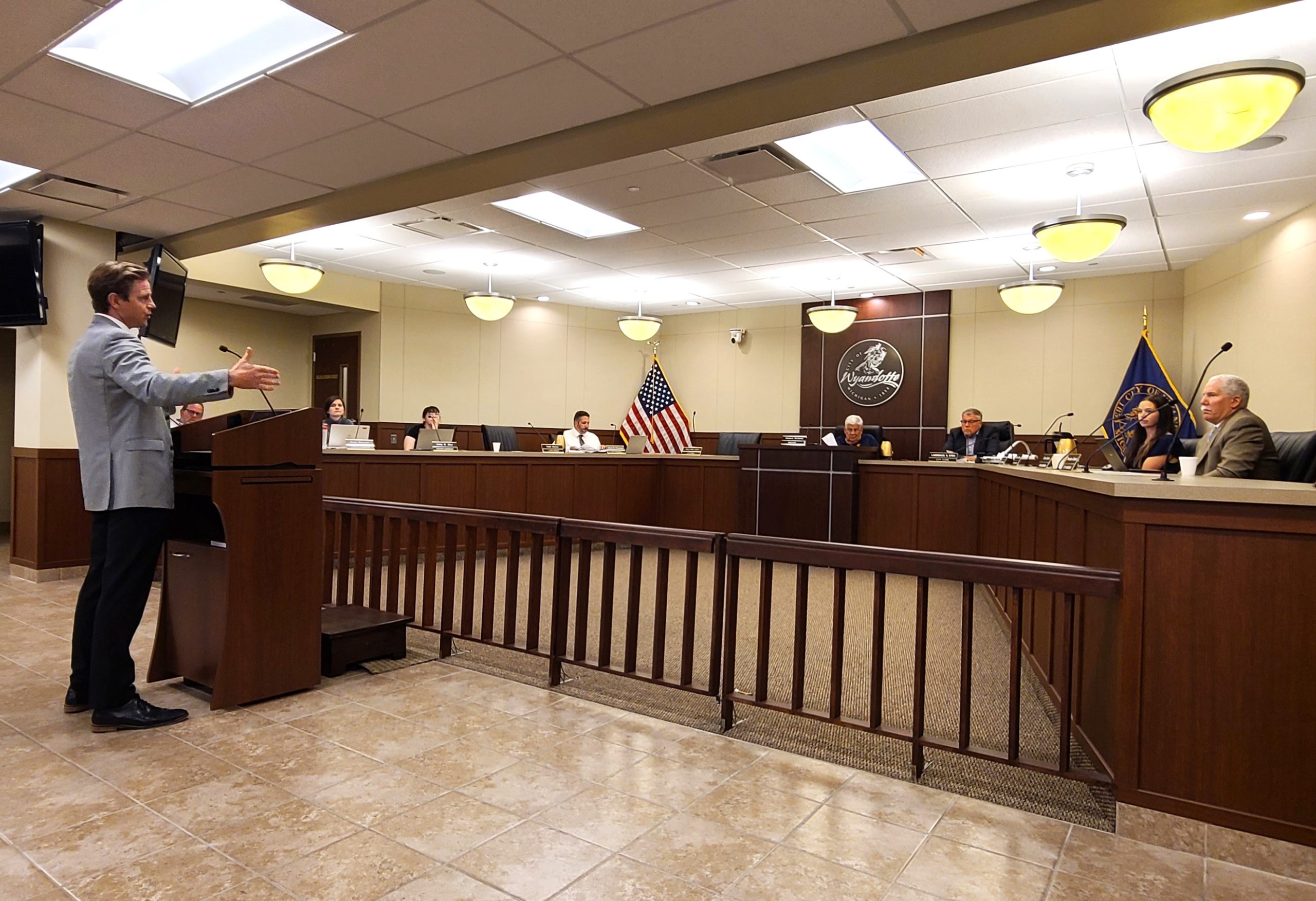
Joe Gruber (left), Wyandotte Community and Economic Development and Downtown Development Authority director, speaks during the July 22 City Council meeting.
By SUE SUCHYTA
Sunday Times Newspapers
WYANDOTTE – The City Council approved a brownfield plan development and reimbursement agreement for the McKinley School residential redevelopment project at its July 22 meeting.
The agreement, which was approved June 18 by the Wyandotte Brownfield Redevelopment Authority, allows the city and the WBRA to capture future tax revenues and reimburse the developer for eligible activities approved within the plan.
The redevelopment of McKinley School into residential units preserves an historical building while encouraging new economic development.
The eligible activity costs are capped at $10.1 million, with approximately $12.2 million in anticipated new tax capture over the plan’s 35-year lifespan.
Joe Gruber, Wyandotte Community and Economic Development and Downtown Development Authority Director, said in a June 13 memo to the WBRA that the vacant and obsolete school would be developed into 15 market-rate, owner-occupied condominiums and 15 market-rate apartment rental units in the two-story, 59,130-square-foot building.
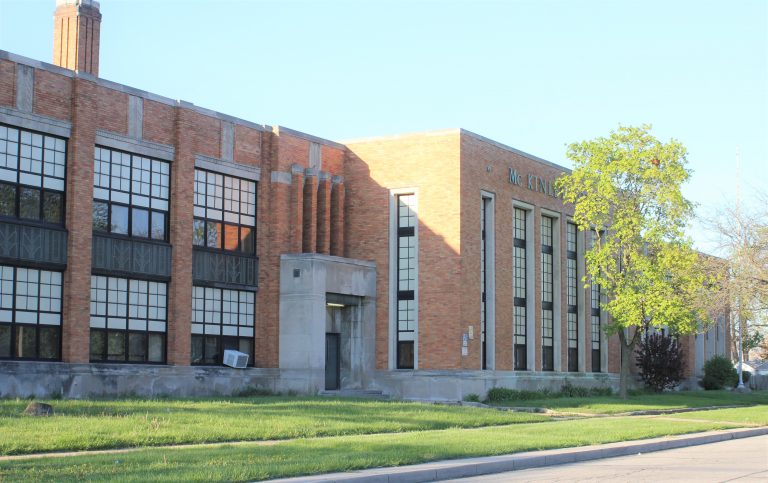
The McKinley School residential redevelopment project will benefit from the Brownfield development and reimbursement agreement approved by the City Council July 22.
In addition, five newly constructed two-story, owner-occupied, single-family houses will be built on the property along Seventh Street.
The developer will also invest $100,000 in the playground next to the former school, which will remain a public, city-owned park.
Ron Thomas, founder and president of Rise Above Ventures, said at the July 22 council meeting that he had submitted the final plans, pending any further review from the building department, for all aspects of the rebuilding of the historic school the previous week.
He said the plans for the five houses were close to completion, but not yet ready for submission.
“No changes as to concept or anything, just further down the path,” Thomas said. “It’s exactly what was proposed and what we’ve been working on for a long time.”
He said he has to finalize the abatement contract before he can begin demolition. He estimated that construction will start next summer, and said the financing was already in place.
City Engineer Jesus Plasencia said the second phase still has to go back to the Planning Commission and City Council for site plan approval.
Thomas concurred, and said he hopes he can get permission to begin the internal abatement before then.